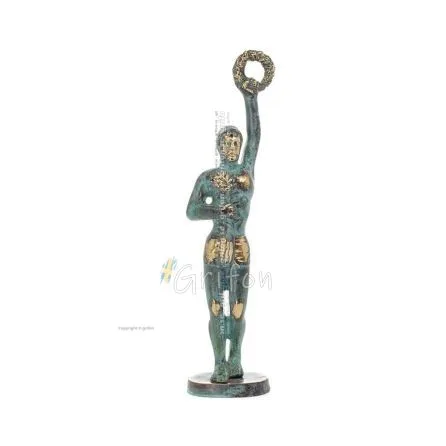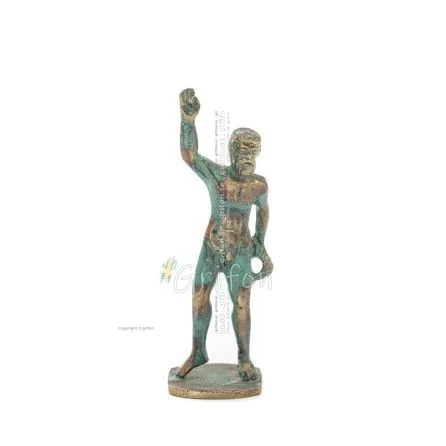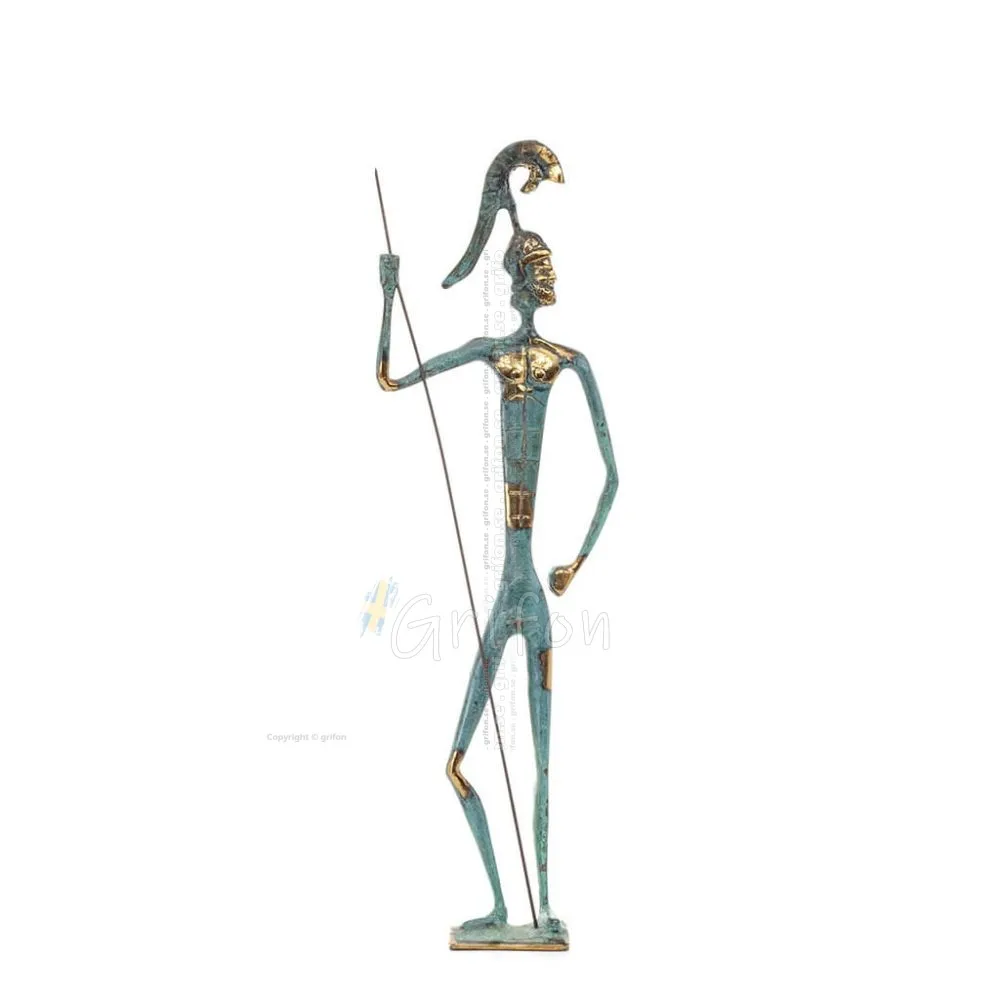

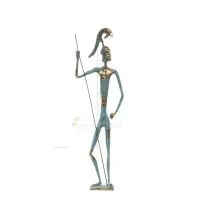
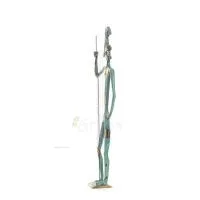
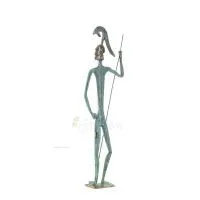
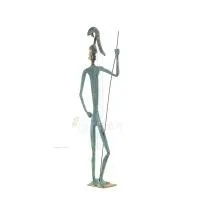


Achilles, a demigod of Greek mythology, is depicted as a giant figure, symbolizing supernatural strength. In one scene of the Iliad, his anger leads him to refuse to fight, bringing disaster to his allies. Later, his revenge for Patroclus’ death exceeds all bounds as he drags Hector’s body around Troy’s walls, provoking the wrath of the gods.
In lesser-known traditions, Achilles kills the Amazon Penthesilea and immediately feels both attraction and sorrow for her death. His figure remains divided between human rage and divine fate, with the conflict unresolved.
Achilles, a demigod of Greek mythology, is depicted as a giant figure, symbolizing supernatural strength. In one scene of the Iliad, his anger leads him to refuse to fight, bringing disaster to his allies. Later, his revenge for Patroclus’ death exceeds all bounds as he drags Hector’s body around Troy’s walls, provoking the wrath of the gods.
In lesser-known traditions, Achilles kills the Amazon Penthesilea and immediately feels both attraction and sorrow for her death. His figure remains divided between human rage and divine fate, with the conflict unresolved.
Wholesale price — shown after approval. Create an account & apply to become a wholesale customer.
Achilles, son of Thetis and Peleus, stands out in Greek mythology as a demigod with supernatural strength and a giant presence. His figure, often depicted in large scale, is linked to scenes of extreme violence and moral ambiguity. In the Iliad, his refusal to fight due to Agamemnon’s insult leads the Achaeans to defeat and Patroclus’ death. His return to battle, with rage beyond human limits, culminates in revenge against Hector. Achilles drags Hector’s body around Troy’s walls, an act that provokes the wrath of the gods and leaves open questions of justice and hubris.
In lesser-known traditions, Achilles kills the Amazon Penthesilea and immediately feels both attraction and sorrow for her death. This episode, full of contradictions, highlights the division between violence and desire, without offering resolution. Achilles’ figure remains torn between human rage and divine fate, with the conflict never fully resolved.
The giant depiction of the hero reinforces his symbolic position as a liminal figure between human and divine. The immortality granted by his mother, but also his fatal heel, intensify the ambiguity of his existence. Achilles’ fate—to die young but glorified—remains open to interpretation and contradiction.
In modern times, Achilles’ figure serves as a symbol of the ambiguity of heroic violence and human destiny. His giant presence maintains the tension between glory and destruction, without providing answers.
The figure of the giant hero appears in other cultures as well. In ancient India, Bhima of the Mahabharata is portrayed as a giant warrior with supernatural strength, often exceeding the limits of human morality. In Norse mythology, Thor appears as a giant thunder god, whose actions combine protection and destruction. In ancient Mesopotamia, Gilgamesh, the giant king, seeks immortality but remains trapped between divine origin and human fate.
The polysemy of the giant heroic figure and the ambiguity of Achilles remain vivid, inviting modern reflection on the limits of violence, glory, and fate.
Data sheet
Specific References